Evaluating 15 Coronavirus Illustrations in 6K Resolution for Your Project
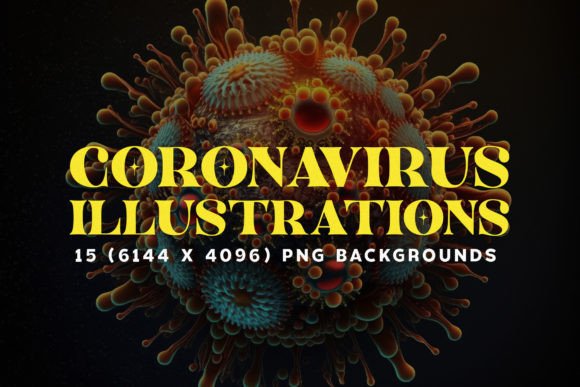
The visual communication of complex scientific subjects, such as the coronavirus, relies heavily on accurate and high-quality imagery. A set of 15 Coronavirus Illustrations 6K represents a specific resource in this domain, offering fifteen distinct, three-dimensional rendered depictions of the virus at an exceptionally high resolution of 6144x4096 pixels. For professionals and creators, evaluating such a collection requires understanding not just what it contains, but how its particular characteristics compare to other available options and fit various project needs.
What Makes the 15 6K Coronavirus Illustrations Distinct
The core offering here is a curated set of fifteen PNG files, each portraying the coronavirus structure through detailed 3D artistry. The 6K resolution is the primary technical standout. At 6144x4096 pixels, these images contain a vast amount of pixel data, far exceeding the requirements of standard web use or most print media. This resolution provides immense flexibility for post-processing; you can crop aggressively into a specific detail of the viral spike proteins while still retaining a sharp, usable image, or scale the asset down for various outputs without loss of quality. The fact that they are provided as PNG backgrounds implies they are ready-to-use, with transparency likely handled in a way that facilitates overlay on other design elements, though the exact nature of the "background" designation should be verified.
Each illustration is described as a unique representation. This suggests artistic variation in color, lighting, angle, or perhaps even metaphorical representation of concepts like transmission or viral load, beyond just a standard scientific model. This moves the collection from purely clinical reference imagery into a tool for creative storytelling, suitable for projects aiming to explain, warn, or educate in a visually engaging manner.
Comparing Format and Style Options in Scientific Visualization
When considering resources for depicting the coronavirus, you face a spectrum of choices. On one end are photographic or micrograph-based images, such as those from electron microscopy. These offer raw scientific accuracy but can be technically complex, monochromatic, and less adaptable for creative narrative projects. On the other end are fully schematic or icon-based graphics, which are excellent for simplicity and clarity in infographics but lack the visceral, realistic detail that 3D rendering provides.
The 15 Coronavirus Illustrations 6K sits between these poles. The 3D rendered approach borrows from scientific understanding—depicting the crown-like spike proteins, the lipid envelope—but presents them with artistic control over color, texture, and lighting. This creates a more accessible and emotionally resonant image than a micrograph, while retaining more biological fidelity than a simple icon. Compared to other 3D render collections, the high resolution and fixed count of fifteen images are key comparison points. Some resources offer dozens of variations at lower resolutions (like 2K or 4K), while others might provide single, ultra-high-resolution master files. The fifteen images provide a moderate library, reducing the need to generate your own variations from a single source, but it is a finite set.
Key Decision Factors: Resolution, Artistic License, and Use Case
Your choice hinges on several intertwined factors. First is the final output medium. For a large-format printed poster, a high-resolution video production, or a detailed interactive digital exhibit, the 6K assets in 15 Coronavirus Illustrations 6K are a strong fit. For a standard website banner or a small graphic in a PowerPoint presentation, this resolution is over-specification; you would be dealing with unnecessarily large file sizes. In such cases, a set of lower-resolution illustrations might be more practical.
Second is the need for artistic consistency versus scientific uniformity. If your project requires a single, accurate model repeated across materials, a resource offering one master 3D model file (perhaps in a format like .OBJ or .BLEND) that you can re-light and re-render yourself might offer more control. The fifteen pre-rendered, unique illustrations offer variety at the cost of that uniform control; each image is a finished artistic piece. This is excellent for creating a series of distinct visuals, but less so for needing the exact same virus model in ten different scenarios.
Third is the scope of the project. Are you creating a single infographic or a comprehensive educational campaign across video, print, and web? For a single project, fifteen images may be ample. For a long-term, multi-channel campaign, you might find the need for more visual variations, potentially pushing you towards a larger library or a customizable 3D model asset.
When These High-Resolution Illustrations Are the Right Fit
The collection is particularly well-suited for specific professional contexts. Medical or scientific communicators producing detailed educational materials for universities, public health agencies, or pharmaceutical companies will find the balance of detail and artistry valuable. The high resolution supports printing in textbooks or large display boards. Digital content creators working on explainer videos or animated sequences can use these 6K PNGs as high-quality texture sources or background plates, ensuring no degradation during compositing and movement.
Graphic designers tasked with creating a series of posters, infographics, or digital ads about COVID-19 awareness can leverage the fifteen unique illustrations to maintain visual freshness across the campaign without commissioning fifteen separate illustrations from an artist, which would be cost-prohibitive. The ready-to-use PNG format integrates directly into design software like Adobe Photoshop or Illustrator, streamlining production.
Recognizing Limitations and Considering Alternatives
It is important to acknowledge where this resource might not be the optimal choice. If your project requires interactive 3D visualization—such as a web-based model that users can rotate and explore—static PNG images, even at 6K, are insufficient. You would need an actual 3D model file for such an application. Similarly, for projects demanding absolute, peer-reviewed scientific accuracy in every structural detail, a purely artistic 3D render might introduce unintentional inaccuracies in scale, protein count, or morphology. Consulting with a scientific illustrator or using validated model repositories would be a more rigorous path.
The fixed number of illustrations is both a strength and a constraint. While it provides a curated selection, a project needing, for example, twenty-five specific viewpoints (from external adhesion to internal RNA core exposure) would find the set limiting. In such cases, an alternative like a purchasable 3D virus model that you can render from any angle becomes a more flexible, though technically more demanding, solution.
Cost is also a relative factor. Compared to hiring a 3D artist to create fifteen custom renders, a pre-made pack like 15 Coronavirus Illustrations 6K is likely far more economical. Compared to free, lower-resolution stock imagery available on some public science websites, it is a premium product. The decision involves weighing your budget against the requirements for resolution, exclusivity, and artistic quality.
Practical Comparisons in Common Project Scenarios
Consider two realistic scenarios. A public health department is producing an annual report on pandemic response, featuring a section on virology. They need one dominant, impactful image for the chapter header and several smaller supportive graphics throughout the section. The 6K illustrations could provide the high-quality header image, and the variety within the set could supply the smaller graphics, creating a cohesive visual theme. This is a strong fit.
Conversely, a software developer is building an educational mobile app for children, featuring an interactive 3D virus they can "dissect." The static PNGs from the 15 Coronavirus Illustrations 6K collection cannot fulfill the core interactive function. The developer would need a 3D model asset, potentially using lower-resolution textures derived from such illustrations, but the primary resource required is fundamentally different.
Making an Informed Decision for Your Needs
Evaluating the 15 Coronavirus Illustrations 6K ultimately comes down to a clear assessment of your project's technical, artistic, and practical demands. Its high value lies in projects that benefit from a blend of scientific representation and artistic freedom, and that have output channels capable of utilizing—or requiring—extreme resolution. The pre-rendered, unique images save production time and offer immediate variety.
Before committing, it is advisable to clarify the exact content of the fifteen images—are they all exterior views, or do some depict cross-sections? Verify the PNG's transparency and color profile to ensure compatibility with your workflow. Finally, honestly assess if fifteen images are sufficient for your entire project scope, or if this collection would serve as a foundational visual asset to be supplemented with other simpler icons or diagrams. By weighing these factors against other available formats and resources, you can determine if this specific set of illustrations aligns with your goals for clarity, impact, and efficient creation.