Dessert Cliparts Stickers Collection: A Practical Guide for Every Creator
Working with digital assets can transform a project from bland to brilliant, but the journey from download to final design is often where small details make or break the outcome. The Dessert Cliparts Stickers Collection offers a set of beautifully hand-painted dessert-themed graphics, but its real value lies in how you understand and apply it. Many creators, from hobbyists to marketing professionals, encounter similar hurdles when integrating such collections into their work. Recognizing these common points of friction before you start can save you time, ensure quality, and help your designs truly shine.
Overlooking File Format and Application Suitability
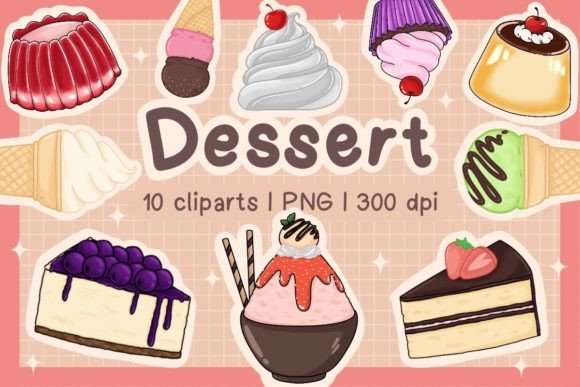
A common oversight is assuming any digital graphic can be used for any purpose. This Dessert Cliparts Stickers Collection provides PNG files with transparent backgrounds at 3000x3000 pixels and 300 dpi. These specifications are excellent for both digital media and print, like posters or mugs. However, a mistake is using these high-resolution files for a low-resolution web icon without scaling them down appropriately, which can unnecessarily slow website loading times. Conversely, attempting to use them for a large-format print project at a reduced size would compromise quality. The practical advice is to always match the asset to the project’s final output. For digital screens, consider resizing the PNGs to an optimized dimension; for physical prints, ensure your design software is set to utilize the native 300 dpi resolution.
Misunderstanding Color Consistency and Device Variation
The product note wisely states that actual colors may vary slightly due to different device screens. This is a crucial, often overlooked, technical reality. A creator might select a vibrant strawberry red from the clipart on their monitor, only to find the printed t-shirt or mug displays a slightly duller shade. This isn’t a flaw in the collection, but a fundamental aspect of digital color reproduction. To avoid disappointment, especially for print projects, the better approach is to check color values. Since the files are in sRGB color mode—ideal for digital displays—you should convert to CMYK if you are sending designs to a professional printer and request a physical proof before bulk production. For purely digital work, calibrating your monitor can help, but always anticipate some variation for your audience viewing on different devices.
The Transparency Advantage and Its Proper Use
The transparent background of these PNGs is a significant benefit, allowing you to layer elements seamlessly onto your designs. A frequent beginner error is placing these graphics on a background color that clashes or doesn’t complement the artwork, making the careful hand-painted details look awkward. Another is forgetting that “transparent” doesn’t mean invisible edges; some clipart elements might have delicate outlines that require a contrasting background to be appreciated fully. A better choice is to experiment with placement on various mock-up backgrounds in your project. Use the transparency to overlay a cupcake sticker onto a textured card design or to nestle an ice cream element within a text layout, checking for visual harmony and readability.
Assuming “Hand-Painted” Means Unlimited Manipulation
The description mentions the collection is 100% hand-painted, which speaks to its unique artistic quality. Some users, however, might misinterpret this as license to extensively alter, distort, or recolor the artwork without considering the aesthetic result. Aggressively changing the colors of a delicately painted pastry can strip away its charm and make it look generic. While you can certainly modify these PNGs, a more respectful and effective approach is to treat them as foundational artistic elements. Adjust brightness or contrast to fit your theme, or add subtle textures around them, rather than fundamentally repainting the artwork itself. This preserves the collection’s original character and often yields a more professional, cohesive final design.
Not Verifying Scope Before Purchase or Download
Before committing to any digital asset collection, it’s essential to confirm it matches your scope of needs. This Dessert Cliparts Stickers Collection includes 10 PNG individual elements for desserts. A potential misunderstanding is expecting a vast library of hundreds of items. For a large, ongoing campaign needing countless unique dessert icons, this might be a starting point rather than a complete solution. However, for a focused project like a bakery’s social media set, a single themed blog post, or a batch of handmade cards, these 10 high-quality elements can be perfectly sufficient. The advice is to inventory your project’s requirements first. Do you need variety or consistency? Ten well-crafted, versatile elements used cleverly across different layouts can often be more effective than fifty disparate ones.
Navigating the Digital Download Process
The collection is for digital download only, with no physical product shipped. This is straightforward, yet a practical point often missed is organizing your downloads immediately. Upon receiving the zip file, a better practice is to extract the 10 PNG files into a dedicated, clearly named folder on your computer or cloud storage. Label them descriptively (e.g., “donut_clipart.png”) rather than keeping generic filenames. This simple step prevents the frustrating “lost asset” scenario later when you’re deep into a design project and can’t locate the specific ice cream cone you wanted. It also makes sharing the files with a team or transferring them to a different device much more efficient.
Applying Clipart Without Considering Context and Licensing
Finally, even with beautiful assets, the application context determines success. Using a detailed, elegant dessert sticker in a minimalist, modern tech presentation might create a confusing visual mismatch. Similarly, employing them in a commercial project without verifying the licensing terms—even if the download files don’t have watermarks—is a risk. While this article describes a typical personal and commercial-use collection, the ultimate responsibility is on you to confirm the specific license for the product you purchase. Always check the seller’s terms to understand permissible uses, especially for high-volume print sales like t-shirts or mugs. The constructive step is to align the artwork’s style with your project’s overall tone and to have clear licensing knowledge, ensuring your creative work is both effective and compliant.
In essence, the Dessert Cliparts Stickers Collection is a versatile toolset. By paying attention to its technical specifications, respecting its artistic nature, and planning your use with an eye for context and detail, you can avoid the common pitfalls that dilute the impact of digital graphics. Whether you’re designing a greeting card, enhancing a blog, or creating merchandise, these practical considerations will help you employ the collection not just as decorative items, but as integral, high-quality components of your creative vision.