The Art of Communicating Change: How Modern Design Templates Empower Management
In the dynamic world of business, the concept of change management is no longer confined to boardroom discussions and internal memos. It has evolved into a critical, visible narrative that must be communicated effectively to stakeholders, employees, and clients alike. This communication demands not just clarity of message, but also clarity of presentation. Enter the modern toolkit of visual design: the vertical banners, rollup stands, brochures, and presentation templates that are transforming how we talk about transformation. This article explores how these creative assets, like the Management Factor Vertical Banner and similar templates, serve as essential instruments in the contemporary practice of guiding and showcasing change.
Understanding the Change Management Factor
At its core, change management is the disciplined approach to preparing, supporting, and helping individuals, teams, and organizations in making organizational change. Its significance lies in mitigating resistance, aligning objectives, and ensuring the successful adoption of new processes, technologies, or strategies. A key "factor" in its success is consistent and compelling communication. When a change initiative is poorly communicated, it risks failure regardless of its inherent merits.
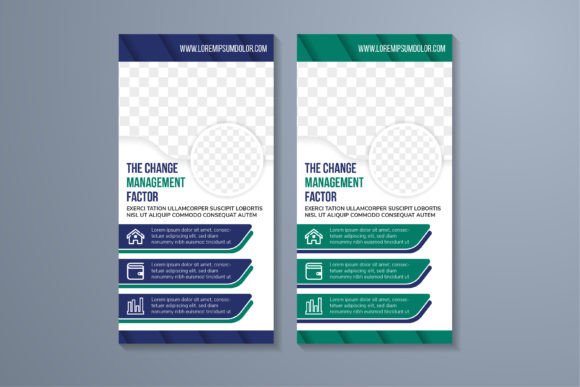
Historically, this communication might have been dry and textual. Today, however, the visual factor is paramount. Abstract geometric designs, clean layouts, and cohesive color schemes—often featuring calming blues and growth-signifying greens—do more than decorate. They frame the change narrative as progressive, structured, and innovative. They turn complex processes into understandable infographics. This visual language helps humanize the abstract concept of change, making it feel less intimidating and more like a collaborative journey.
The Modern Exhibition Trend: Where Business Meets Visual Storytelling
Trade shows, expos, and internal launch events are pivotal moments for announcing and promoting change. The modern exhibition trend leans heavily on minimalist, flat design and creative shapes. A rollup banner stand or a vertical banner designed with these principles acts as a silent spokesperson. It instantly conveys a company’s commitment to modernity and forward-thinking. For a topic like change management, which can be met with skepticism, these visuals establish credibility and professionalism before a single word is read.
Consider an example: a company launching a new digital workflow system. A well-designed banner using abstract shapes connected by flowing lines can visually symbolize integration and efficiency. The color palette (blue for trust, green for growth) subliminally reinforces positive messages. This immediate visual context lowers the barrier to engagement, inviting the viewer to learn more from the accompanying brochure or presentation.
The Practical Relevance of a Cohesive Design Template Suite
The practical magic lies in cohesion. A high-quality template suite—including files for Adobe Illustrator (AI), EPS, JPG, and SVG—ensures that the visual story of your change initiative is consistent across every touchpoint. From the large format print of an exhibition stand to the digital ad on a website, and the editable PDF brochure handed to a client, the core design elements remain the same.
- Vector Graphics: The mention that "all graphics are 100% vector" is crucial. Vector images scale infinitely without losing quality, meaning your banner design can adapt from a small flyer to a massive wall graphic seamlessly, maintaining sharp, professional integrity.
- Editable Text, Shapes, and Color: This feature empowers businesses. You aren't just buying a static image; you're acquiring a customizable framework. The "management factor" icon and layout can be retained, while the text and specific colors are adapted to your unique change message—be it a financial restructuring, a marketing overhaul, or a store rebranding.
- High Resolution (300dpi): For print materials like placards, posters, and brochures, high resolution is non-negotiable. It ensures that your presentation of this important business concept is physically flawless, reflecting the care put into the change management process itself.
Clarifying Common Misunderstandings
A common assumption is that such design templates are merely "decorative" or only for large corporations with big budgets. This is a misunderstanding. In today's landscape, even small businesses and startups undergo significant change. Using a professional, editable template democratizes high-quality visual communication. It allows a small team to produce materials that compete with larger entities, ensuring their change message is received with the same seriousness.
Another misconception is that the "abstract" nature of some designs is too vague. On contrary, abstract geometric shapes are powerful in business contexts. They can represent concepts like network, growth, structure, and innovation without the cultural or literal constraints of more realistic imagery. They provide a clean, conceptual space for the specific text message to take center stage.
Building a Broader Understanding: From Template to Strategy
Viewing these design assets—the banner, the brochure, the presentation cover—not as isolated products but as parts of a visual communication strategy is key. They fit into the modern work lifecycle at critical junctures:
- Internal Alignment: A presentation template with a "change management factor" icon can be used in internal kick-off meetings, helping employees visually grasp the project phases.
- External Promotion: The vertical banner and rollup stand serve at trade shows to attract partners and clients, signaling industry leadership and adaptive capability.
- Detailed Explanation: The flat design brochure or leaflet provides the space for deeper dives into the process, benefits, and timelines of the change, using the established visual theme to maintain trust.
- Digital Expansion: The same SVG and AI files can be used to create digital advertisements, website banners, and social media graphics, extending the change narrative into the online spaces where modern business lives.
Conclusion: Communication as a Pillar of Change
Ultimately, managing change is about managing people's perceptions and journeys through transition. The modern exhibition trend in business design, exemplified by creative, editable templates for banners, stands, and publications, provides an indispensable toolkit. It translates the often-intangible "factors" of management—process, structure, vision—into tangible, engaging visual experiences. By leveraging these high-quality, vector-based resources, businesses of all sizes can ensure that their message of change is not just heard, but also seen, understood, and embraced. It turns the challenging concept of change into a compelling story of progress, inviting everyone involved to be a part of the next chapter.
When you download a comprehensive template suite, you're not just getting graphics; you're acquiring a foundational element for your change management strategy—one that speaks clearly, consistently, and professionally in the visual language of today's business world.