Modern Business Templates: The Power of Vector Design
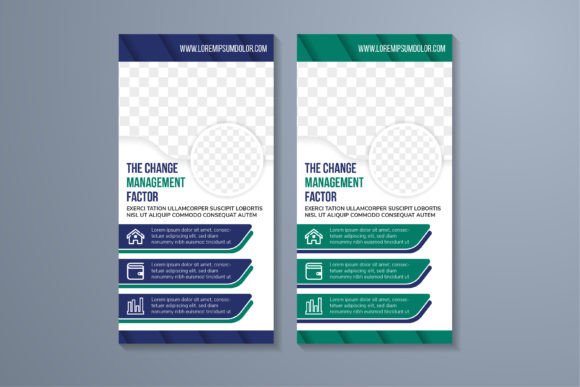
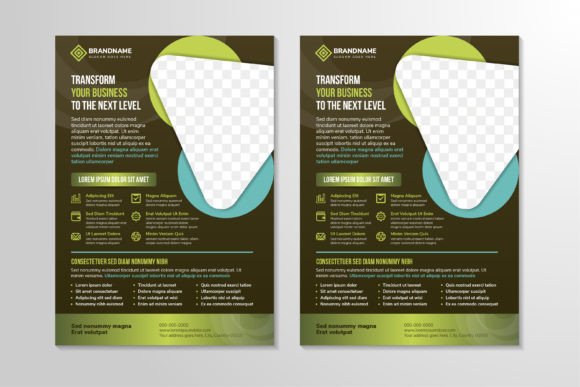
In the fast-paced world of business marketing and communication, first impressions are vital. Whether launching a new product, presenting an annual report, or promoting a company event, the visual design of your materials speaks volumes before a single word is read. This is where professionally designed templates, like the versatile corporate flyer described, become indispensable tools. By combining elements such as a multicolored green gradient and blue color palette, space photo collage, and clean vertical illustration banners, these templates offer a foundation for creating stunning, cohesive, and effective business collateral.
The Anatomy of a High-Quality Business Template
Let’s break down the key features that define a premium, ready-to-use design asset. Understanding these components helps you appreciate not just its beauty, but its practical utility.
Vector Graphics: The Foundation of Flexibility
The phrase “All graphics are 100% vector” is arguably the most significant technical advantage. Unlike raster images (like standard JPGs), which are made of pixels and can lose quality when resized, vector graphics are built from mathematical paths and points. This means they can be scaled infinitely—from a small business card to a large billboard—without any loss of clarity or sharpness. For a business user, this guarantees that your logo, icons, and geometric shapes remain pristine across all your print and digital materials.
Editable Everything: Your Creative Control Center
A template is not a finished product; it’s a starting point. The promise of “Editable text, shapes and color” is what transforms a static image into a dynamic tool. You can customize every aspect:
- Text: Change fonts, sizing, and wording to match your specific message, from a promotional flyer headline to a corporate report paragraph.
- Shapes: Modify the geometric elements, like triangles or abstract forms, to better align with your brand’s identity.
- Color: Adjust the gradient from blue to green, or completely overhaul the palette to fit your company’s color scheme.
This level of editability empowers you to maintain brand consistency while tailoring the design for each unique campaign.
High Resolution & File Formats: Ready for Any Medium
The specification “high resolutions 300dpi” caters specifically to professional print needs. DPI (dots per inch) is a measure of print quality; 300dpi is the standard for crisp, high-quality brochures, posters, and stationary. The inclusion of multiple file formats—AI (Adobe Illustrator), EPS, JPG, SVG—ensures compatibility across different software and use cases. Use the AI file for deep editing in Illustrator, the SVG for web use, the JPG for quick digital placements, and the EPS for universal vector compatibility with other design programs.
The Strategic Purpose: Beyond Just Looking Good
A well-crafted template serves multiple strategic purposes in modern business operations. It’s far more than a decorative background.
Efficiency and Cost-Effectiveness in Marketing
For small businesses, startups, or even busy corporate marketing departments, designing every piece of collateral from scratch is time-consuming and expensive. A pre-structured, well-organized template slashes production time. You focus on inputting your content rather than worrying about layout balance, color theory, or graphic alignment. This efficiency allows for quicker campaign rollouts and more agile responses to market opportunities.
Establishing and Maintaining Brand Identity
Consistency is key to brand recognition. Using the same foundational template—with its consistent gradient style, geometric motifs, and layout structure—for your flyer, brochure, and presentation cover creates a visual family. This makes your company appear more professional, trustworthy, and unified. The modern, abstract design with nature-inspired greens and corporate blues can communicate values like innovation (through the space collage), growth (green), and stability (blue) simultaneously.
Empowering Non-Designers
Not every business owner or marketing professional is a graphic designer. These templates democratize good design. With editable elements and clear layers, someone with basic software knowledge can produce a result that looks expert-made. This bridges the gap between creative vision and practical execution, ensuring that even businesses without a large creative budget can compete visually.
Common Misunderstandings and Clarifications
When approaching design templates, a few assumptions can lead to missed opportunities.
Misunderstanding 1: “A template limits creativity.” On the contrary, a good template provides a proven, balanced framework that frees you from foundational design headaches. It’s like having a well-built house; you then decorate and personalize the interior. Your creativity is channeled into the content and subtle customizations, not reinventing the layout grid.
Misunderstanding 2: “It’s only for print.” While the 300dpi and formats like EPS highlight print readiness, the SVG and JPG files make these assets perfect for digital use. The same template can be the backdrop for your website banner, social media ad, email newsletter header, or digital product catalog. The vector nature ensures it looks sharp on all screens.
Misunderstanding 3: “All templates are generic.” The specific design elements—like the photo collage and gradient choice—give this template a distinct mood and style. It’s not a blank, neutral slate but a curated starting point with a contemporary, forward-looking aesthetic. This provides a thematic direction that can elevate your content.
Integrating the Template into Your Business Ecosystem
How does such a template fit into the daily activities and long-term plans of a business? Its relevance spans multiple departments and touchpoints.
- Marketing & Promotion: Directly used for flyers, posters, and promotional banners for events or product launches.
- Corporate Communications: Serves as the cover layout for annual reports, company profiles, or investor presentations, conveying professionalism.
- Stationary & Identity: Adapted for letterhead, business cards, or catalog covers, creating a unified brand experience.
- Digital Presence: Assets extracted from the template can style your online platforms, ensuring brand consistency between your print and digital worlds.
- Internal Creativity: Even for internal training manuals or achievement certificates, using a branded template boosts morale and reinforces company culture.
The Bigger Picture: Why Design Quality Matters Now
In an era where consumers and clients are inundated with visual information, quality design is a competitive filter. A messy, amateurish flyer can undermine a great product. A sleek, coherent, and modern template, leveraging trending elements like gradients and photo collages, signals that your business is current, attentive to detail, and values its communication with the world. It builds trust (E-E-A-T’s “Trust” factor) by demonstrating expertise and authority in your presentation.
Ultimately, investing in or utilizing a high-quality vector template is not just about making something “look nice.” It’s about streamlining your workflow, empowering your team, solidifying your brand’s voice, and ensuring that every piece of communication you send—from a simple flyer to a complex corporate brochure—carries the full weight and professionalism of your business’s vision. It turns a basic marketing task into an opportunity for strategic brand expression.