Jamuna Google Slide Template: Evaluating Its Place in Your Presentation Toolkit
When you need to create a presentation, whether for a client pitch, an internal review, or an educational seminar, the foundation you choose can significantly impact both your workflow and the final result. Presentation templates, particularly those designed for platforms like Google Slides, offer a pre-structured starting point. Among the available options, the Jamuna Google Slide Template presents itself as a comprehensive set. Understanding what it offers, how it compares to the broader landscape of templates, and where it excels or may fall short is crucial for anyone looking to make an informed, practical decision about their resources.
What Is the Jamuna Google Slide Template?
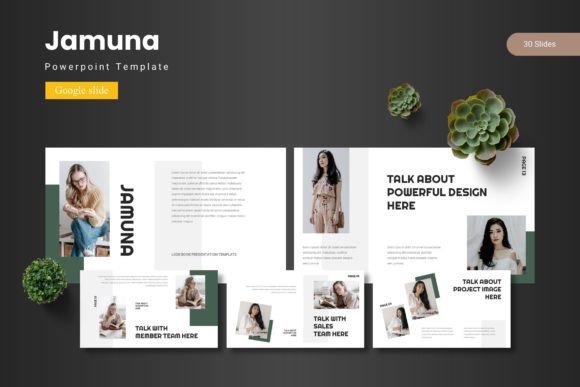
The Jamuna Google Slide Template is a packaged digital product consisting of presentation slide designs. Its core offering is a set of 150 total slides, organized across 5 distinct premade color schemes. This means you receive 30 slides tailored to each color variant. The template includes standard structural components like section break slides, a variety of handcrafted infographics, and pixel-perfect illustrations. Notably, all graphical elements are resizable and editable, and the template utilizes master slide foundations for consistent formatting. It also provides practical features like picture placeholder areas for drag-and-drop image insertion and dedicated slides for gallery or portfolio layouts. The main deliverables included are 5 PPTX files and corresponding Google Slides files, along with documentation covering fonts and photo information.
This structure indicates that the Jamuna template is not a single design but a multi-variant system. Its distinction lies in the volume of slides and the intentional provision of multiple color schemes from the outset. Unlike many templates that offer one style and require manual color changes, Jamuna provides five coordinated palettes, potentially saving time for teams or individuals who need to present the same content in slightly different visual contexts.
Core Features and Practical Implications
Evaluating a template requires looking beyond the feature list to understand how those features translate into real-world use. The 150 slides across 5 colors suggest depth. For a user, this could mean less need to create new slide layouts from scratch, as a wide array of content arrangements—for text, statistics, images, and comparisons—is pre-built. The handcrafted infographics and illustrations are based on master slides, which is a professional approach ensuring that if you change a color or font on the master, it updates throughout the presentation consistently.
The resizable and editable graphics claim is significant. In many templates, vector graphics are locked or difficult to modify without advanced software. If Jamuna’s elements are truly editable within Google Slides or PowerPoint, it offers greater flexibility to tailor icons and diagrams to your specific message. The inclusion of both PowerPoint (PPTX) and native Google Slides files addresses a common compatibility consideration, catering to users in different organizational ecosystems.
Considering the Tradeoffs of a Multi-Variant Template
A template system like Jamuna Google Slide Template, with its five color variations, brings inherent tradeoffs. The primary strength is choice and consistency. You can select a color theme that aligns with your brand or topic and have 30 slides already harmonized within that theme. This can drastically speed up the initial design phase.
The potential limitation, however, is complexity and potential for clutter. With 150 total slides, navigating the file to find the right layout might become cumbersome unless the file is well-organized. Furthermore, the value of five color schemes is highest if you frequently need to switch between visual identities. For a user who needs one presentation for one purpose, the extra variants may simply be unused assets. The effort required to modify a core template versus simply choosing one of five pre-set schemes is a key decision factor: do you prefer immediate variety, or the freedom to create a completely custom palette?
Comparison with the General Template Landscape
When exploring alternatives, it's helpful to categorize templates into broad types. Some are minimal, offering perhaps 15-20 slides in one style, focusing on clean aesthetics and space for heavy customization. Others are industry-specific, tailored for marketing, education, or technology with relevant imagery and data layouts. Then there are bulk systems, like Jamuna Google Slide Template, which prioritize volume and variant options.
Jamuna sits in the latter category. Compared to a minimal template, it offers more starting material but may impose a stronger visual identity that requires more work to deviate from. Compared to an industry-specific template, it is likely more generic, relying on its infographics and illustrations to be versatile across topics. Its strength is its breadth; its weakness could be a lack of niche specialization.
Another critical comparison point is the platform. Being designed for Google Slides means it leverages that platform’s collaborative and cloud-based strengths. However, some professionals might find advanced design customization slightly more limited in Google Slides compared to desktop PowerPoint. The provision of PPTX files alongside Google Slides files attempts to bridge this gap, offering a path to more advanced editing in PowerPoint before potentially importing back to Google Slides for sharing. This dual inclusion is a notable advantage over templates that are exclusive to one platform.
When Jamuna Might Be the Right Fit
The Jamuna Google Slide Template is likely a strong candidate for certain situations. Consider teams or individuals who produce presentations regularly for different audiences or departments. The five color schemes allow quick adaptation of the same content structure for, say, a finance team (using a more conservative palette) and a creative team (using a brighter variant).
It is also a fit for users who value a large library of slide layouts but do not have the time or design skill to build each from scratch. The infographics and illustration assets can elevate the visual appeal of a presentation without requiring a designer on staff. Furthermore, if your workflow involves both PowerPoint for deep editing and Google Slides for final sharing and collaboration, the included dual file formats directly address that need.
When Another Option Might Be Necessary
Despite its features, the Jamuna template may not be the optimal choice in all scenarios. If your presentation requires extremely specific, branded imagery that cannot be achieved by editing provided graphics—for instance, needing custom-drawn illustrations of your proprietary product—you might be better served by a simpler template that acts as a subtle canvas, or by hiring a custom designer.
Similarly, if your work is highly specialized, such as academic scientific presentations requiring complex chart formats, a template built specifically for that field, with appropriate data visualization layouts, might be more efficient than a general-purpose template like Jamuna. Also, users who strictly work in one platform and never need the other file type might find the dual-file inclusion superfluous, though it doesn’t detract from the core value.
Making an Informed Decision: Key Factors to Weigh
Choosing a presentation template is a practical decision. Here are factors to consider, with Jamuna Google Slide Template as a reference point:
- Volume vs. Specificity: Do you need a wide array of slide types (agendas, team pages, timelines, quotes, portfolios) as Jamuna provides, or just a few perfect layouts?
- Customization Depth: Are the editable graphics sufficient for your brand adjustments, or do you need a template with almost no preset style?
- Platform Workflow: Does the offer of both Google Slides and PowerPoint files match your process, or is it unnecessary?
- Visual Cohesion: Is having multiple pre-coordinated color schemes a valuable shortcut, or would you prefer a single theme you modify yourself?
- Project Frequency: Is this for a one-off presentation, or for ongoing work where a template library saves cumulative time?
By weighing these factors, you can assess whether the structure of the Jamuna Google Slide Template aligns with your needs. Its design suggests it is best for users who create presentations frequently, appreciate having multiple visual options ready to go, and operate in environments that might use both major presentation software platforms. For a single, highly unique presentation, or for work demanding niche-specific layouts, the broader template market might yield a better-fit option.
Ultimately, tools like the Jamuna Google Slide Template exist to reduce the friction between having an idea and presenting it compellingly. Its value proposition is rooted in scale and choice. By providing a substantial number of slides across multiple colors with editable assets, it aims to be a versatile toolkit rather than a single solution. For many professionals comparing options, that versatility could be the decisive factor, enabling them to adapt quickly to different presentation contexts without starting from a blank slide each time.