Crafting Impactful Presentations: How Professional Templates Elevate Your Message
Whether pitching to investors, teaching a class, or sharing a vision with your team, a presentation is more than just a collection of slides. It’s a narrative, a visual journey designed to inform, persuade, and inspire. In today’s fast-paced digital landscape, the tools we use to craft these narratives have become incredibly sophisticated, yet the core challenge remains: how do you convey complex ideas clearly and leave a lasting impression? This is where professional presentation templates, like the Mutora Keynote Template, enter the stage—not as mere decorative backdrops, but as foundational frameworks for effective communication.
Beyond Basic Slides: The Purpose and Significance of a Design Template
Many assume that a presentation template is simply a pre-made set of colors and fonts. In reality, its purpose is far more significant. A professional template serves as a cohesive visual system. Think of it as the architecture for your ideas. It provides a consistent structure for layout, typography, color, and imagery, ensuring that from your opening slide to your final conclusion, your audience experiences a unified and engaging story. This cohesion is crucial because it reduces visual clutter and cognitive load for your viewers. Instead of deciphering a new design on every slide, they can focus entirely on your content and your message.
The practical relevance is immense. In a business context, a polished presentation builds credibility and professionalism, directly impacting how proposals and data are received. In education, clear visual frameworks help students follow complex topics. For creatives, a beautiful template can showcase work in a way that complements its artistic value. Fundamentally, a good template empowers the presenter. It shifts the labor from painstakingly designing every element from scratch to thoughtfully curating content within a proven, effective format.
Deconstructing a Modern Template: What "Mutora" Offers
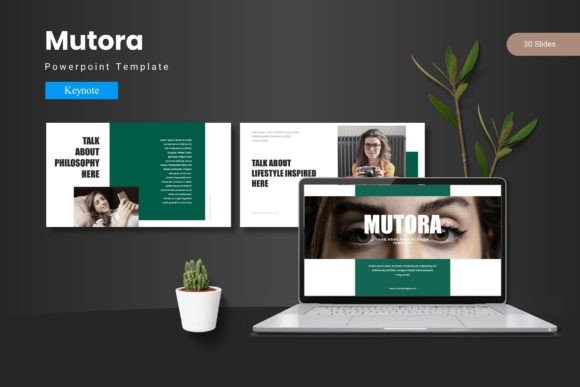
To understand how these templates function in modern life, let’s explore the typical features of a comprehensive design system, as exemplified by the Mutora Keynote Template. Its description provides a clear blueprint of what a professional tool entails:
- Volume and Variety: With 150 total slides across 5 premade colors, it offers substantial scope. This means you’re not limited to one look; you can choose a color scheme that matches your brand, topic, or mood. Having 30 slides for each template section ensures you have dedicated, well-designed layouts for every part of your presentation—introductions, data segments, conclusions, and more.
- Structural Guidance: Features like Section Break Slides are not just aesthetic; they are functional. They help you organize your presentation into clear chapters, making the flow logical and easy for your audience to follow.
- Visual Communication Tools: Handcrafted infographics based on master slides and pixel-perfect illustrations are key. Infographics transform statistics and processes into understandable visuals, while quality illustrations add engaging, custom artwork without requiring design skills from the user.
- Flexibility and Ease: The promise that all graphics are resizable and editable and that you have drag-and-drop picture placeholder galleries speaks directly to the need for adaptability. You can customize without breaking the design system, inserting your own photos, charts, or logos effortlessly.
This bundle of features—the main file including 5 Keynote items, 30 slides, and a folder with color schemes and documentation—isn’t just a product list. It represents a full ecosystem for creation, designed to fit into the workflow of anyone from a seasoned executive to a student preparing their first major project.
Clarifying Common Misunderstandings
A common assumption is that using a template makes a presentation generic or "cookie-cutter." This is a fundamental misunderstanding. A template provides the rules, not the content. Just as a beautifully designed book template doesn’t dictate the novel’s plot, a presentation template doesn’t dictate your message. It ensures that your unique content is displayed with optimal clarity and visual harmony. The customization of layouts, fonts, and colors is built into systems like Mutora precisely to allow your personal or brand identity to shine through.
Another misconception is that such tools are only for design experts. Modern templates are built for effortless customization. With drag-and-drop placeholders and resizable elements, the technical barrier is removed. The focus returns to what matters most: crafting your argument, refining your data, and honing your delivery.
Fitting into Modern Workflows: Technology and Daily Activities
Presentation design has evolved alongside technology. Software like Apple Keynote has pushed the boundaries of what’s possible in animation and interactivity. A professional template built for Keynote leverages this powerful technology, providing users with a starting point that is already optimized for the software’s capabilities. This fits seamlessly into modern life where efficiency is prized. Instead of spending hours on design, you can spend minutes selecting the right slide from a curated library and then hours perfecting your speech.
In daily activities, from a community club meeting to a personal portfolio showcase, the need for clear communication is universal. A well-structured template helps anyone achieve a level of polish that commands attention and respect, turning a simple talk into a compelling presentation.
Building a Broader Understanding: The Ecosystem of Effective Communication
To truly grasp the subject, view the presentation template not as an isolated tool, but as a component in a larger ecosystem of effective communication. It sits between your raw content (the ideas, data, stories) and your final delivery (the spoken words, the audience interaction). Its role is to bridge the gap.
- Content Preparation: You gather your facts, narrative, and goals.
- Visual Structuring: The template helps you organize this content into a visual narrative with consistent headers, image placements, data visualization, and pacing.
- Delivery: With a slide deck that supports rather than distracts, you deliver your message with greater confidence and impact.
The template’ significance lies in stage two. It translates abstract ideas into concrete visual forms. Examples abound: a complex quarterly revenue report becomes understandable through a well-designed chart slide; a multi-step project plan becomes clear through a timeline infographic; an emotional creative pitch gains power through a sequence of beautifully image-led slides.
Practical Examples in Action
Imagine a startup founder using a template like Mutora. They select the bold color variation to match their brand’s energy. They use the portfolio slides to drag-and-drop images of their product. The handcrafted infographics help them visualize their growth metrics and market position without needing a graphic designer. The final presentation is cohesive, professional, and allows their compelling story to take center stage.
Consider a university lecturer. They might use the cleaner, more muted color scheme. The section break slides help them divide the lecture into distinct modules: Introduction, Theory, Case Studies, Summary. The editable illustrations allow them to add simple diagrams specific to their field. The result is a lecture that is not only informative but also visually engaging, aiding student comprehension and retention.
Conclusion: Leaving a Lasting Mark with Each Slide
The ultimate goal of any presentation is to make an impact. To impress your audience and leave that lasting mark. Professional presentation templates are engineered to help you achieve this. They remove the friction of design, provide a foundation of visual best practices, and offer the flexibility to make your work uniquely yours. From the 150 total slides offering ample choice to the pixel-perfect illustrations ensuring quality, tools like the Mutora Keynote Template represent a smart investment in your communication skills.
Understanding this topic from the ground up reveals that these templates are far more than just "pretty backgrounds." They are strategic tools for clarity, efficiency, and professionalism. Whether you’re in business, education, or creative fields, leveraging such a system allows you to focus on what you say, while ensuring that how you show it is equally powerful. In a world where ideas compete for attention, giving them the best possible stage is not just an advantage—it’s essential.