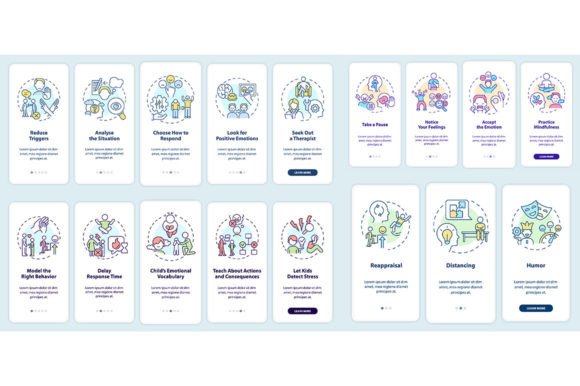
A Comprehensive Guide to Emotional Regulation Mobile App Screens
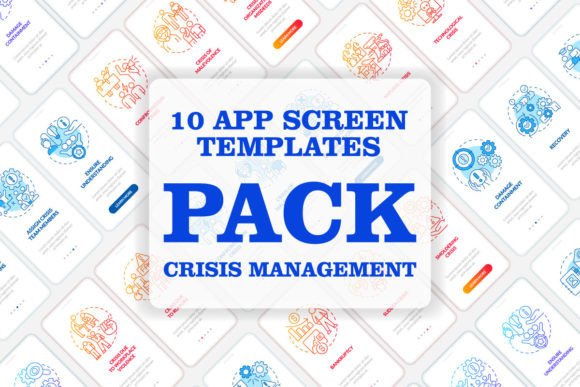
In the digital landscape of mental wellness tools, the visual design and user interface of an application play a critical role in its effectiveness. Emotional Regulation Mobile App Screens represent a specialized set of editable graphic templates designed for creating such applications. This resource provides a structured walkthrough with linear concepts, built on a clean UI/UX GUI template utilizing Myriad Pro-Bold and Regular fonts. Available in multiple file formats like EPS, SVG, PNG, JPEG, and AI, these templates serve as a foundational asset for designers and developers aiming to build apps that help users manage their emotions.
What Are Emotional Regulation Mobile App Screens?
Emotional Regulation Mobile App Screens are not a functional app, but a professional design template package. They are a set of four mobile app screen templates that visually conceptualize the step-by-step journey a user might take within an emotional regulation application. The package includes editable graphics and instructions, focusing on linear processes—ideal for guiding users through sequential activities like mood logging, cognitive reframing exercises, or breathing techniques. The use of specific fonts like Myriad Pro ensures a modern, readable aesthetic, while the included file formats offer flexibility for further customization and integration into various design workflows.
Reasons for Interest in These Design Templates
Individuals or teams researching these templates typically fall into specific categories. UI/UX designers looking for a jumpstart on a mental wellness app project are primary users. Product managers evaluating the visual feasibility and user flow of a proposed emotional regulation tool might use these screens for prototyping. Educators or therapists creating instructional materials about digital mental health tools may also find them valuable as clear, visual aids. Furthermore, startups or agencies like BSD Studio, which create icons, brochure infographics, and more, utilize such templates to accelerate production and maintain design consistency across related projects.
Benefits and Practical Value
The core benefit of the Emotional Regulation Mobile App Screens is the significant reduction in initial design time. Having a pre-structured walkthrough with editable elements allows teams to focus on refining the user experience rather than building it from scratch. The linear concept design is particularly beneficial for emotional regulation apps, where a clear, guided path can reduce user anxiety and increase adherence. The professional typography and clean GUI template provide a credible, calming visual foundation, which is essential for apps dealing with sensitive topics. The inclusion of multiple file formats (EPS, SVG for scalability; PNG, JPEG for quick previews; AI for deep editing) ensures compatibility with most design software.
Tradeoffs and Key Considerations
While the template offers a strong starting point, it comes with inherent tradeoffs. The design is a template, not a custom creation. It may not perfectly align with a brand's unique identity or a highly specific therapeutic methodology without considerable modification. The "linear concepts" approach is excellent for straightforward processes but might be limiting for apps wanting to offer non-linear, exploratory user journeys. Furthermore, acquiring the template is just a first step; it requires skilled designers to adapt it and developers to implement it into a functional, backend-supported application. Expectations should be set around it being a design asset, not a plug-and-play solution.
Situations Where This is a Strong Fit
The Emotional Regulation Mobile App Screens template is an excellent fit for several scenarios. It is highly suitable for projects with tight timelines or limited initial design budgets, where a proven visual structure can expedite development. It aligns well with apps designed to introduce users to emotional regulation through foundational, step-by-step techniques—such as daily mood tracking or guided meditation sequences. Teams that value consistency across their digital products (like a studio offering weekly new topics and discounts on similar design resources) will find this template integrates seamlessly into their existing workflow and asset library.
When to Consider Alternatives
Alternatives should be seriously considered in specific cases. If the goal is to create a highly innovative app with a unique, non-linear interface or game-like mechanics, a custom design from the ground up would be more appropriate. For projects already possessing a strong, established brand identity with distinct fonts and color schemes, adapting this template might require more effort than original design. Also, if the need is for a fully functional, out-of-the-box app rather than design visuals, one should look towards existing emotional regulation applications or custom software development services, not template assets.
Practical Decision-Making Insights
When evaluating whether the Emotional Regulation Mobile App Screens align with your goals, ask key questions. First, is your primary need visual design scaffolding, or is it complete app development? Second, does your concept for an emotional regulation app involve a linear, instructional user flow? Third, do you have the design resources to effectively edit and implement these EPS, SVG, and AI files into your project? Finally, consider the longer-term vision: if you plan to create a suite of wellness-related materials (icons, infographics), this template from a studio like BSD Studio could be part of a cohesive design ecosystem. Subscribing for updates might provide ongoing value.
Aligning the Template with Your Needs
Determining fit ultimately hinges on your project's phase and scope. For ideation and prototyping, these screens offer a tangible visual to discuss and validate. For accelerated design in a confirmed project, they provide a quality foundation. It is crucial to remember that the effectiveness of any final app will depend far more on the underlying psychological methodology, user testing, and robust functionality than on the initial screen designs alone. These templates are a tool to visualize and expedite that process, particularly for audiences researching and comparing how digital tools can facilitate emotional regulation. They serve as a bridge between concept and creation, offering a practical, editable starting point for a meaningful design challenge.